Whole House Fans
Whole House Fan Installation
by Local California Pros
A whole house fan is the fastest, most efficient way to cool a California home in the evening. We install QuietCool systems — sized, installed, and warranted — from start to finish, usually in a single day.
Free assessment · Written quote · Same-day installation on most homes
Cool Your Home Without Paying AC Prices.
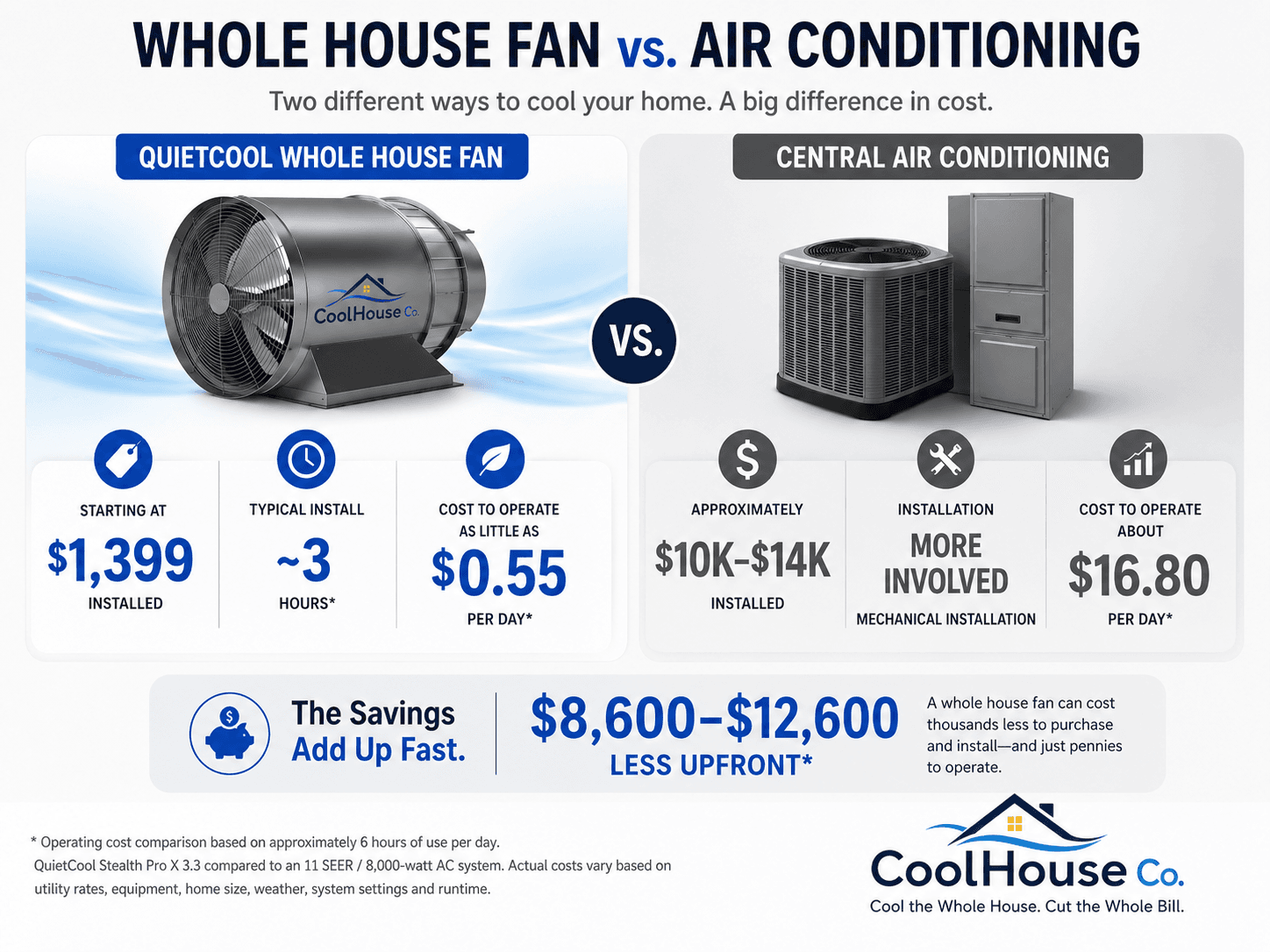
Central air conditioning cools your home using compressors, refrigeration equipment, and a more involved mechanical system. A QuietCool whole house fan takes a simpler approach — pulling cooler outdoor air through your home while pushing trapped hot air out through the attic.
What is a whole house fan — and how does it work?
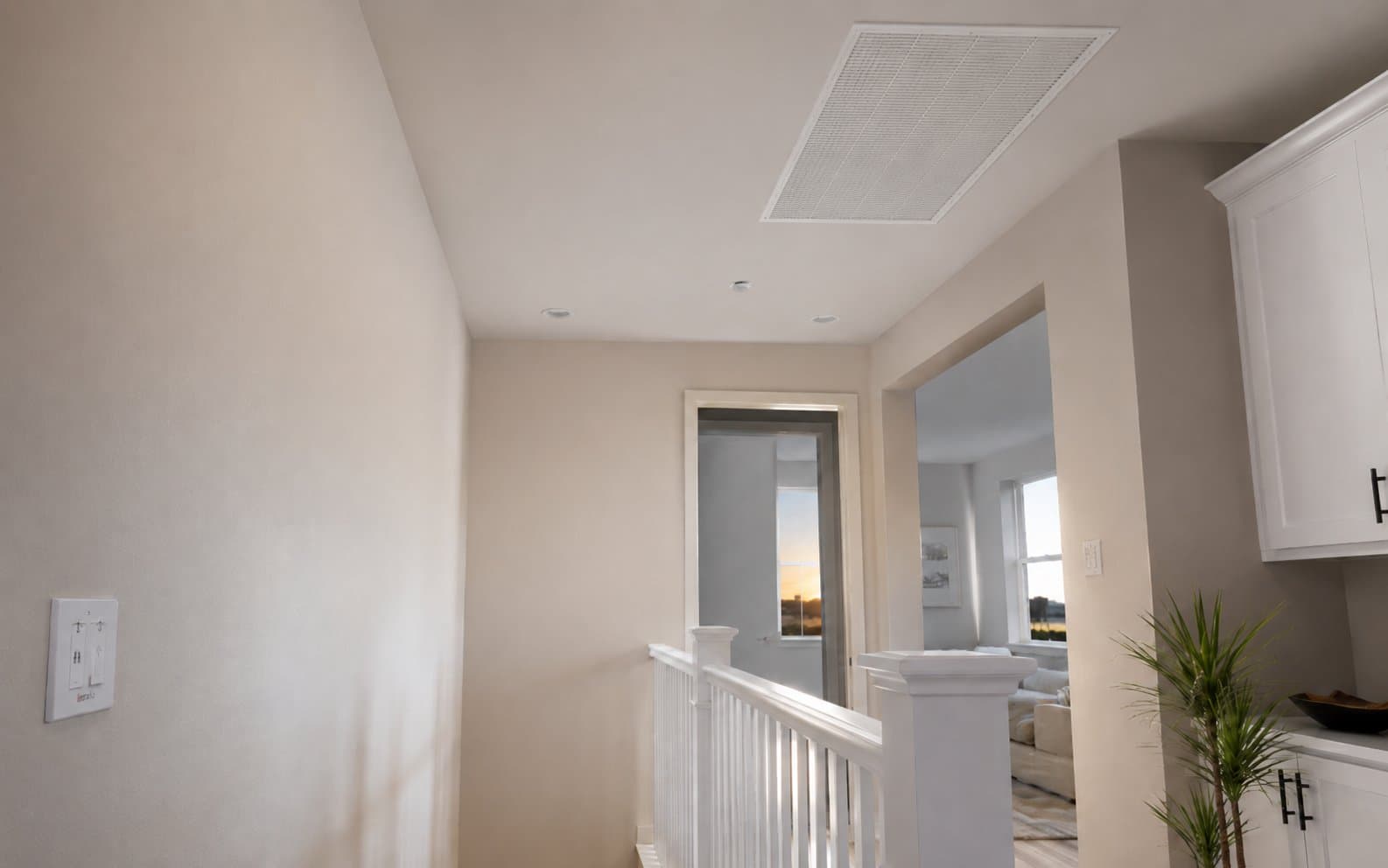
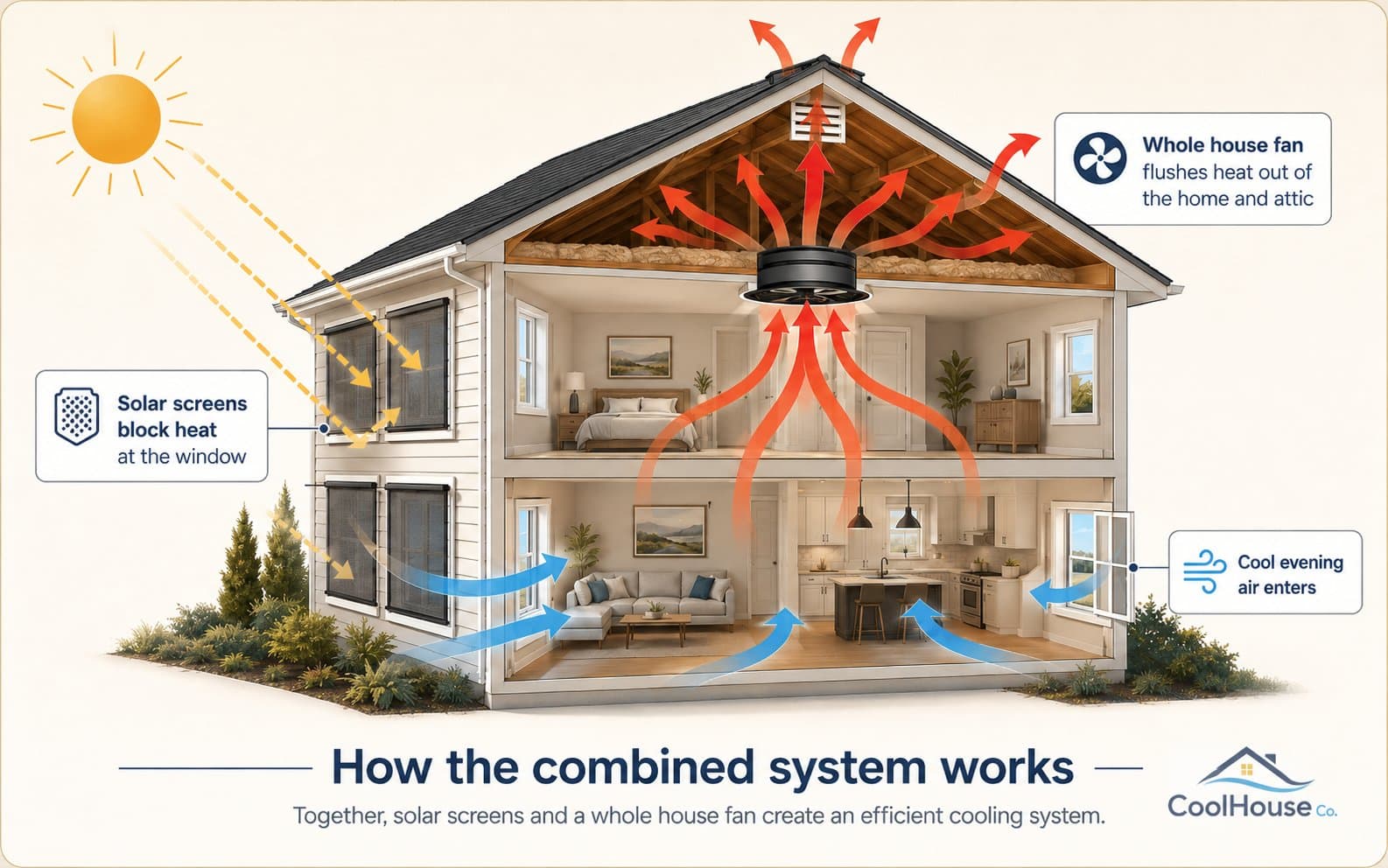
A whole house fan is a powerful ventilation unit installed in your ceiling — typically in a hallway or central location on the top floor. It connects directly to your attic. When you open windows and run the fan, it creates a strong flow of air that pulls cool outdoor air into every room while simultaneously pushing hot indoor air and attic heat out through your roof vents.
The effect is fast and dramatic. On a typical Bay Area or California evening — where outdoor temperatures drop to the mid-60s or low 70s by 8–10 PM — a whole house fan can bring your home down to that outdoor temperature within 10–15 minutes. No refrigerant. No compressor cycling. About 1/10th the energy of your central AC.
When the air outside is cooler than the air inside, QuietCool can replace trapped indoor heat with fresh outdoor air — often allowing homeowners to turn the AC off or avoid turning it on in the first place.
We install QuietCool.
CoolHouse Co. specializes in QuietCool whole house fan systems — engineered for high airflow, quiet operation, and energy-efficient home cooling.
QuietCool fans use a remote motor system that keeps the noisy components in the attic, not in your ceiling. They run at comfortable, conversational volume levels on low speed and are sized by CFM based on your home's square footage, ceiling height, and desired air changes per hour. We carry the full residential lineup and recommend the right model for your specific home during the free assessment.
What Does It Cost to Run?
This is where a whole house fan can make a major difference. When cooler outdoor air is available, QuietCool can move a large volume of air through the home using a fraction of the electricity required by conventional air conditioning.
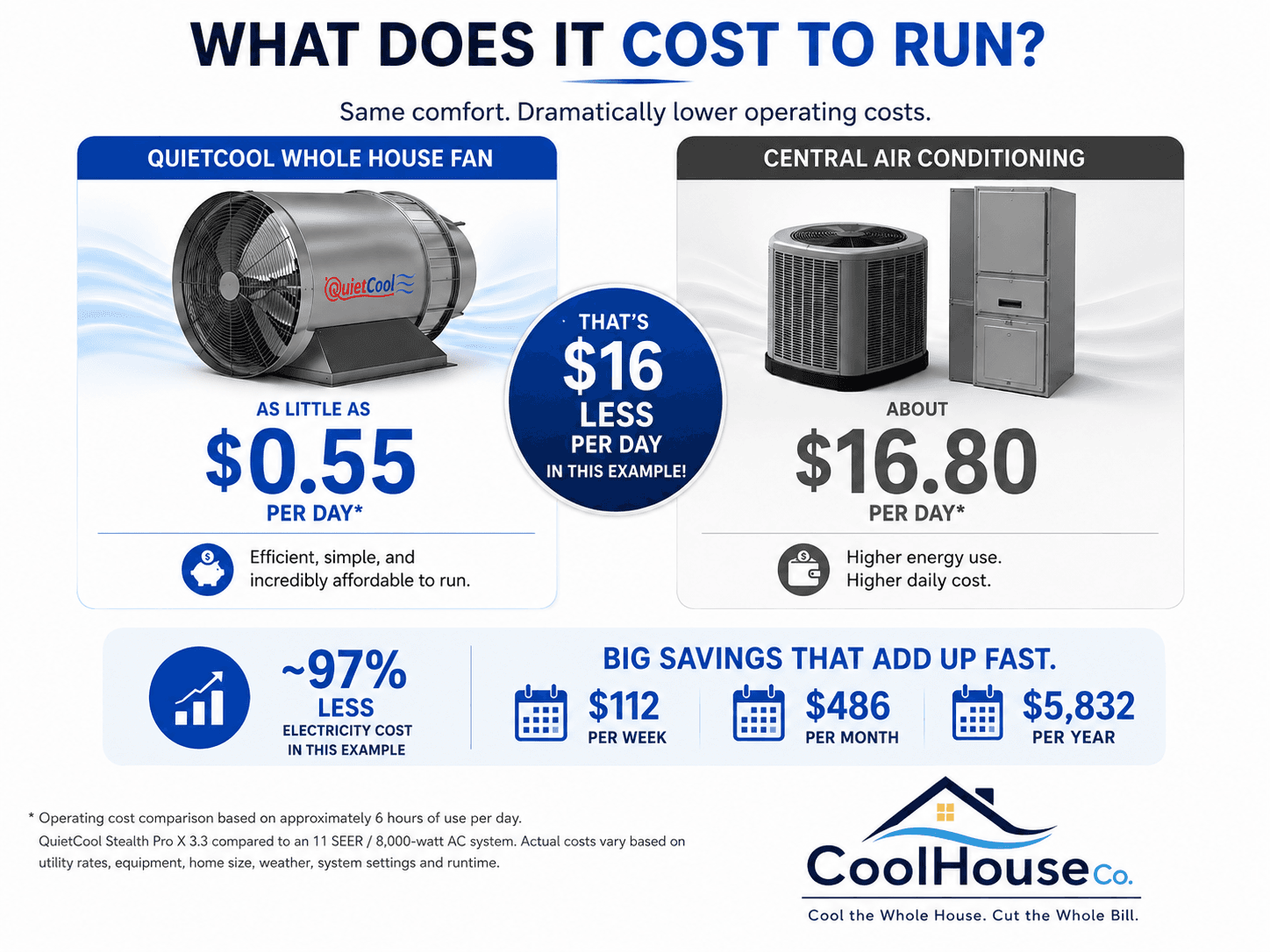
Illustrative operating-cost comparison based on approximately 6 hours of use per day, comparing a QuietCool Stealth Pro X 3.3 with an 11 SEER / 8,000-watt AC system. Actual costs vary based on utility rates, equipment, home size, weather, system settings and runtime.
The Smarter Way to Cool. The Smarter Way to Save.
The savings begin with the system itself — and can continue every day you use fresh outdoor air instead of compressor-based cooling.

See What QuietCool Would Cost in Your Home.
Tell us a little about your home and we'll help identify the right QuietCool system and provide an installed estimate.
You May Be Surprised How Quiet It Is.
Forget the old attic fan you may remember. QuietCool systems are engineered to move a tremendous amount of air without filling your home with fan noise.
In everyday terms, QuietCool operates in roughly the same sound range as appliances you already use around your home.
About as quiet as appliances you already use every day.
Actual sound levels vary by model, installation and operating speed.
Is a whole house fan right for your home?
Whole house fans work best when outdoor nighttime temperatures consistently drop below indoor daytime temperatures. In most of California — including the Bay Area, Sacramento Valley, Central Valley, and many inland communities — this is true for 5–7 months of the year.
You're a strong candidate if:
- Your upstairs bedrooms are hot at night and slow to cool down
- You run the AC through the evening and into the night
- Your home is at least 1,200 square feet
- You have attic access and roof vent capacity
- Your outdoor evenings regularly reach the 60s or low 70s
You may want to manage expectations if:
- You're in a coastal fog zone where nights are already cool year-round
- Your home has a very low-pitch roof with limited attic volume
- Your area regularly stays above 80°F at midnight (rare in most California markets)
We assess all of these factors during your free in-home visit — and we'll tell you honestly if it's not the right fit.
How a whole house fan lowers your summer power bill
Your central AC is the single largest electricity draw in your home during summer. It runs hardest during late afternoon and evening — which in California is also when PG&E's Time-of-Use (TOU) rates are at their peak. You're paying premium rates for the most expensive appliance in your home, during the hours it has to work hardest.
A whole house fan changes that equation entirely.
When outdoor temperatures drop in the evening — typically starting around 7–9 PM in most of the Bay Area and Central Valley — you open your windows and run the fan instead of the AC. The home cools naturally. The AC doesn't need to run again until the hottest part of the following afternoon. For a typical California home, this means:
- 40–60% reduction in AC runtime during spring and fall shoulder seasons
- Meaningful reduction in summer peak-hour electricity use
- Faster cooldown the next day, because the attic heat from the night before has been flushed out
Actual savings vary by home size, insulation, habits, and local climate. We discuss real numbers for your specific home during your free assessment.
What installation looks like
Free In-Home Assessment (60–90 minutes)
We visit your home, measure the square footage, inspect attic access, evaluate roof venting, and discuss the best fan location for whole-home airflow. We identify any attic conditions that need addressing before install. You get a written quote before we leave.
Scheduling
Most installations are scheduled within 5–10 business days of estimate approval. We work Monday through Saturday.
Installation Day (typical ~3 hours for most homes)
Our crew arrives with all equipment. We cut the ceiling opening, install the fan unit, connect it to your attic, confirm proper ventilation, wire the switch or smart control, test the unit at multiple speeds, and clean up completely before we leave.
Walkthrough
Before we leave, we walk you through how to operate the fan correctly — including when to use it, how to set the speed, and how to operate it safely during smoke or high-pollen days.
Note on permits: Some California jurisdictions require a permit for whole house fan installation. We'll tell you during your assessment whether a permit is required in your city, and we handle the permit process when needed. Included in your written quote — no hidden fees.
Frequently asked questions about whole house fans
How loud are whole house fans?
QuietCool systems on low speed run at approximately 45–55 decibels — roughly the same as a quiet dishwasher or the refrigerator running in the next room. Noticeably quieter than most bath exhaust fans, clothes dryers, or the old attic fans many homeowners remember. High speed is louder but most homeowners run the fan on low or medium for everyday evening cooling.
Can I run a whole house fan when there's wildfire smoke?
No — and this is important. A whole house fan brings outdoor air into your home. During active smoke events, keep it off, keep windows closed, and run your HVAC system with a high-quality filter instead. We discuss this during every installation walkthrough. On clear-air days, the fan is ideal.
Do I need to upgrade my attic ventilation?
Sometimes. Whole house fans move a large volume of air, and that air needs somewhere to exit. We calculate the required attic vent area during your assessment. If your existing venting isn't sufficient, we can add or enlarge vents as part of the installation — included in your quote if applicable.
What's the difference between a whole house fan and an attic fan?
An attic fan only ventilates the attic — it does nothing for the living space. A whole house fan moves air through the entire home — living rooms, bedrooms, hallways — and then out through the attic. A whole house fan moves 10–20× more air than a typical attic fan and actually cools where you live.
Can I run a whole house fan if I have solar panels?
Yes — and it's a great combination. Your solar panels produce peak electricity during the day. Your whole house fan runs in the evening when the sun is down. The two systems complement each other. There's no technical conflict.
How long does a QuietCool whole house fan last?
A quality QuietCool system should last 15–25 years with minimal maintenance. No filters to replace, no refrigerant to recharge, no compressor to fail.
Will a whole house fan work on a two-story home?
Yes — this is actually one of the best use cases. Two-story homes trap heat on the upper floor because hot air rises. A whole house fan installed on the top floor ceiling draws that hot air up and out, pulling cooler air up from the ground floor. Unbearable upstairs bedrooms at 10 PM are one of the most common problems we solve.
How much does a whole house fan cost installed?
QuietCool whole house fans start at $1,399 installed. Final cost depends on the model that fits your home, your square footage, and whether attic ventilation work is needed. We give you a complete written quote during your free assessment — we don't quote blind over the phone because every home is different.
Pair it with solar screens for even better results.
A whole house fan removes heat from inside your home. Solar screens stop heat from entering in the first place. Together, they work on both sides of the cooling equation — your home heats up less during the day, and cools down faster in the evening. Homeowners who install both typically see the largest bill reductions and most dramatic comfort improvement.
Ready when you are
Ready to stop fighting your upstairs heat?
Free in-home assessment. We size the right QuietCool fan for your home, give you a written quote, and install it — usually within the same week.